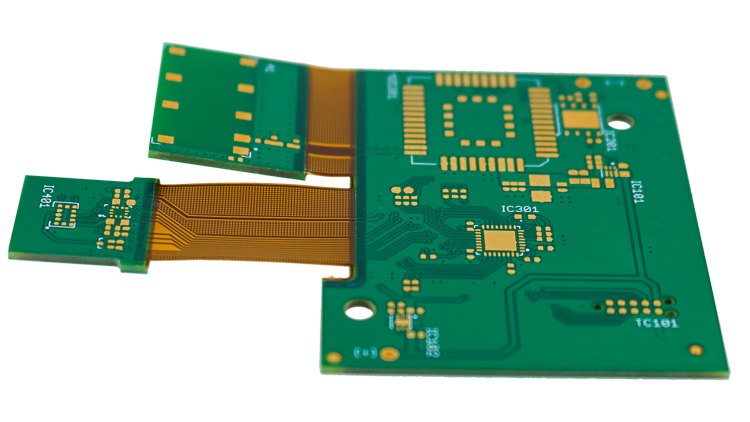

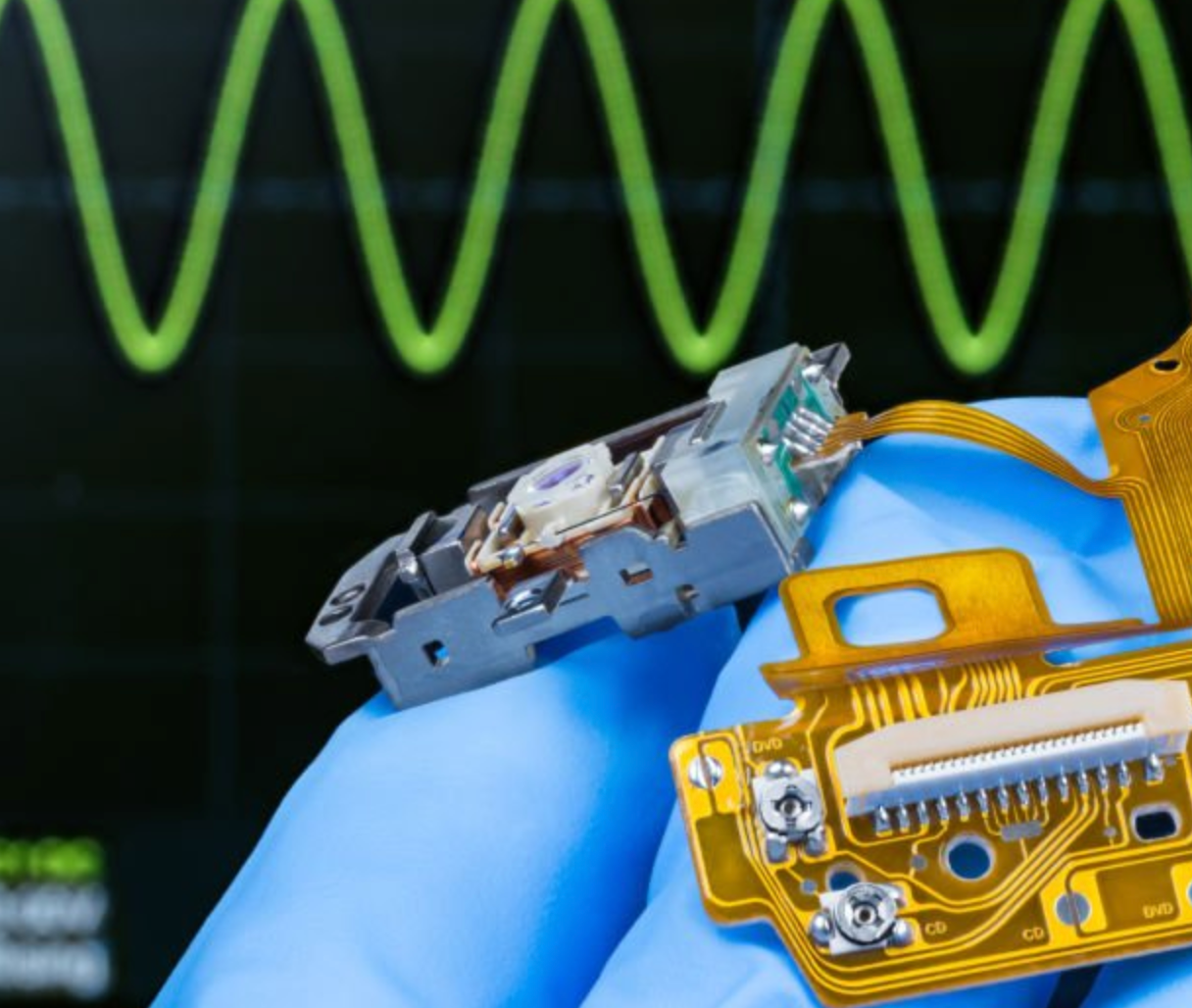
At Altest Corporation, we deliver industry-leading Flex and Rigid-Flex PCB design, fabrication, assembly, and testing services for organizations developing next-generation electronic products. Our flexible circuit board solutions are engineered to maximize design freedom, reduce weight, improve reliability, and withstand demanding mechanical and environmental conditions. Whether you're developing compact medical devices, aerospace systems, military electronics, automotive controls, wearable technology, or high-speed communication equipment, our engineering team provides precision-manufactured PCB solutions that meet the highest standards of quality and performance.
Our Flex and Rigid-Flex PCB solutions enable innovative electronic products with smaller footprints, lighter weight, superior durability, and enhanced electrical performance.

Flex and rigid-flex PCBs offer significant advantages over traditional rigid circuit boards by eliminating unnecessary connectors, reducing wiring complexity, and increasing long-term reliability. Our engineers specialize in designing single-layer, double-layer, multilayer, and rigid-flex PCB architectures using advanced materials and proven engineering methodologies. We optimize bend radius, dynamic flex regions, controlled impedance, signal integrity, EMI shielding, thermal performance, and high-density component placement to ensure exceptional electrical performance in the most space-constrained and high-reliability applications.
Our state-of-the-art manufacturing facilities utilize advanced fabrication technologies and strict IPC-compliant processes to produce high-quality flexible printed circuit boards and rigid-flex PCBs with exceptional accuracy and consistency. From prototype development to full-scale production, every PCB is manufactured using premium materials and subjected to comprehensive quality inspections, including Automated Optical Inspection (AOI), X-ray analysis, electrical testing, flying probe testing, impedance verification, and reliability validation.


With decades of expertise in advanced PCB engineering and electronic manufacturing services, Altest Corporation is a trusted partner for companies requiring high-performance flexible circuit board solutions. Our integrated capabilities—from schematic capture and PCB layout to fabrication, assembly, inspection, and functional testing—allow us to deliver complete turnkey manufacturing solutions under one roof.
Find answers to common questions about flexible circuits, polyimide materials, dynamic flexing, coverlays, and 3D packaging solutions.
A Flex PCB consists entirely of flexible polyimide materials, allowing the entire board to bend and twist to fit into tight electronic enclosures. A Rigid-Flex PCB combines flexible circuits with standard rigid FR-4 sections, allowing heavy components to be mounted on the stable rigid areas while the flexible sections act as integrated, highly reliable interconnects.
Rigid-Flex boards eliminate the need for traditional wire harnesses, heavy connectors, and ribbon cables. This drastically reduces the overall product weight, minimizes volumetric space requirements, improves vibration resistance, and eliminates potential points of failure caused by loose mechanical interconnects.
We primarily use high-performance polyimide (PI) films, combined with either rolled-annealed (RA) or electrodeposited (ED) copper. Polyimide materials offer exceptional dimensional stability, excellent electrical insulation, high-temperature resistance for lead-free reflow, and superior dynamic flexing capabilities.
"Static flex" (or flex-to-install) means the board is designed to be bent only once or twice during initial assembly to fit precisely inside an enclosure. "Dynamic flex" means the board is engineered to continuously bend, twist, or roll millions of times during the product's daily operation, such as in a laptop hinge or a robotic arm.
Yes. Adhesiveless polyimide laminates are highly recommended for advanced and Rigid-Flex applications. By removing the acrylic or epoxy adhesive layer holding the copper to the film, the board becomes significantly thinner, more flexible, and vastly more resistant to via-cracking during the extreme heat of SMT reflow.
Standard liquid photoimageable (LPI) solder mask is too brittle and will crack when bent. Instead, we laminate a flexible polyimide "coverlay" over the outer flex layers. This coverlay protects the copper circuitry from oxidation and short circuits while maintaining absolute flexibility.
Yes, but it requires mechanical reinforcement. To place SMT components on the flex area, we must laminate a rigid "stiffener" directly underneath the component pad footprint. This prevents the delicate solder joints from fracturing or tearing away from the board during bending.
Stiffeners are localized, non-conductive rigid supports added to specific areas of a flex circuit. They are typically made from FR-4 glass epoxy, thicker polyimide, or sometimes stainless steel. They provide structural backing for heavy components, reinforce ZIF (Zero Insertion Force) edge connectors, and ensure specific areas remain completely flat.
A "bikini" reveal is a precision manufacturing technique where the flexible layers run continuously through the rigid sections, but the outer rigid FR-4 materials are selectively milled or cut away to expose the flexible layers only in the exact zones where bending is required.
Yes, routing on flex is highly specialized. Traces should always be routed perpendicular (90 degrees) to the bend line to prevent stress fracturing. Curves should use smooth radiuses rather than sharp 45 or 90-degree angles, and large copper ground pours should use cross-hatched patterns instead of solid planes to preserve maximum flexibility.
Partner with Altest Corporation for your next high-reliability PCB fabrication and turnkey SMT assembly project. Our engineering team is ready to review your gerber files and provide a detailed, competitive estimate.