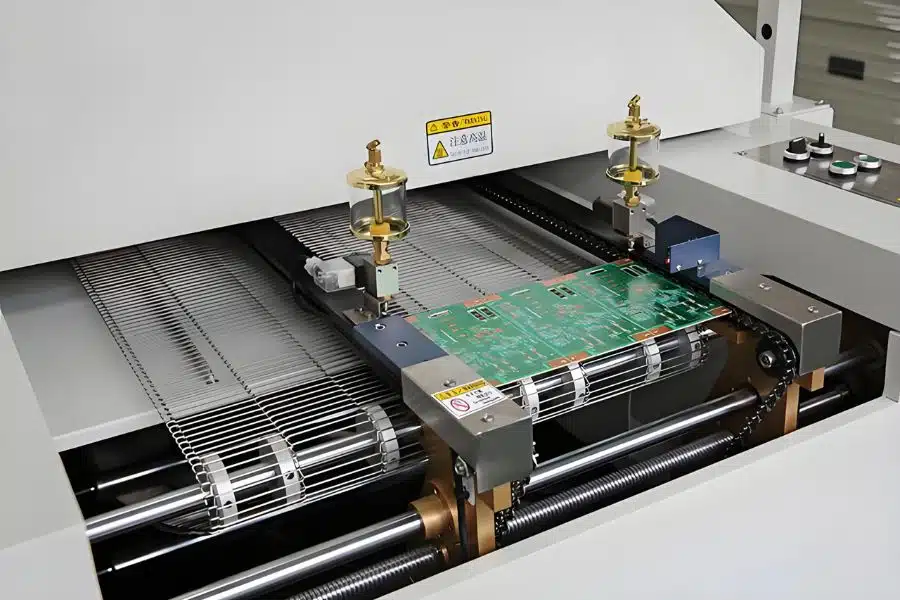
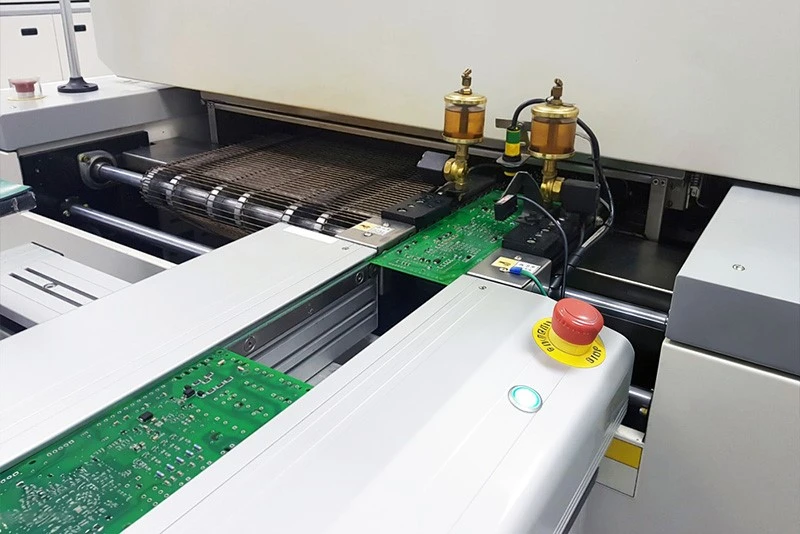
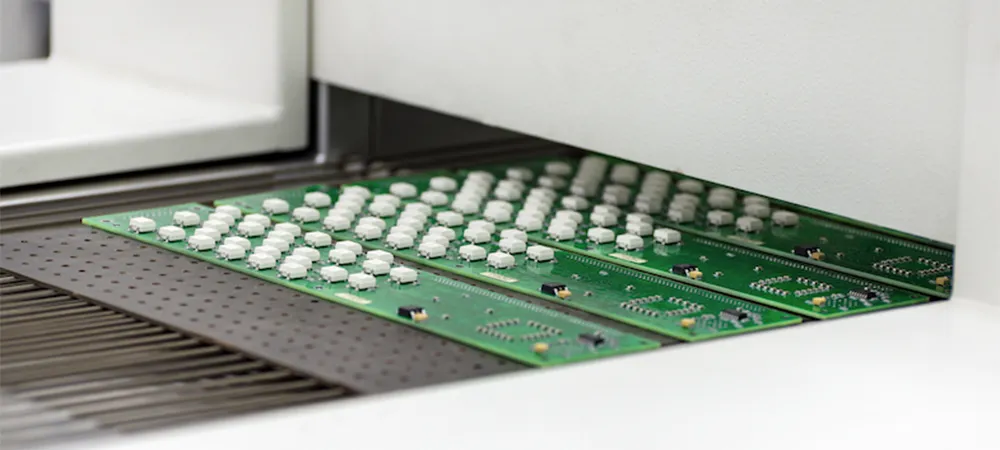
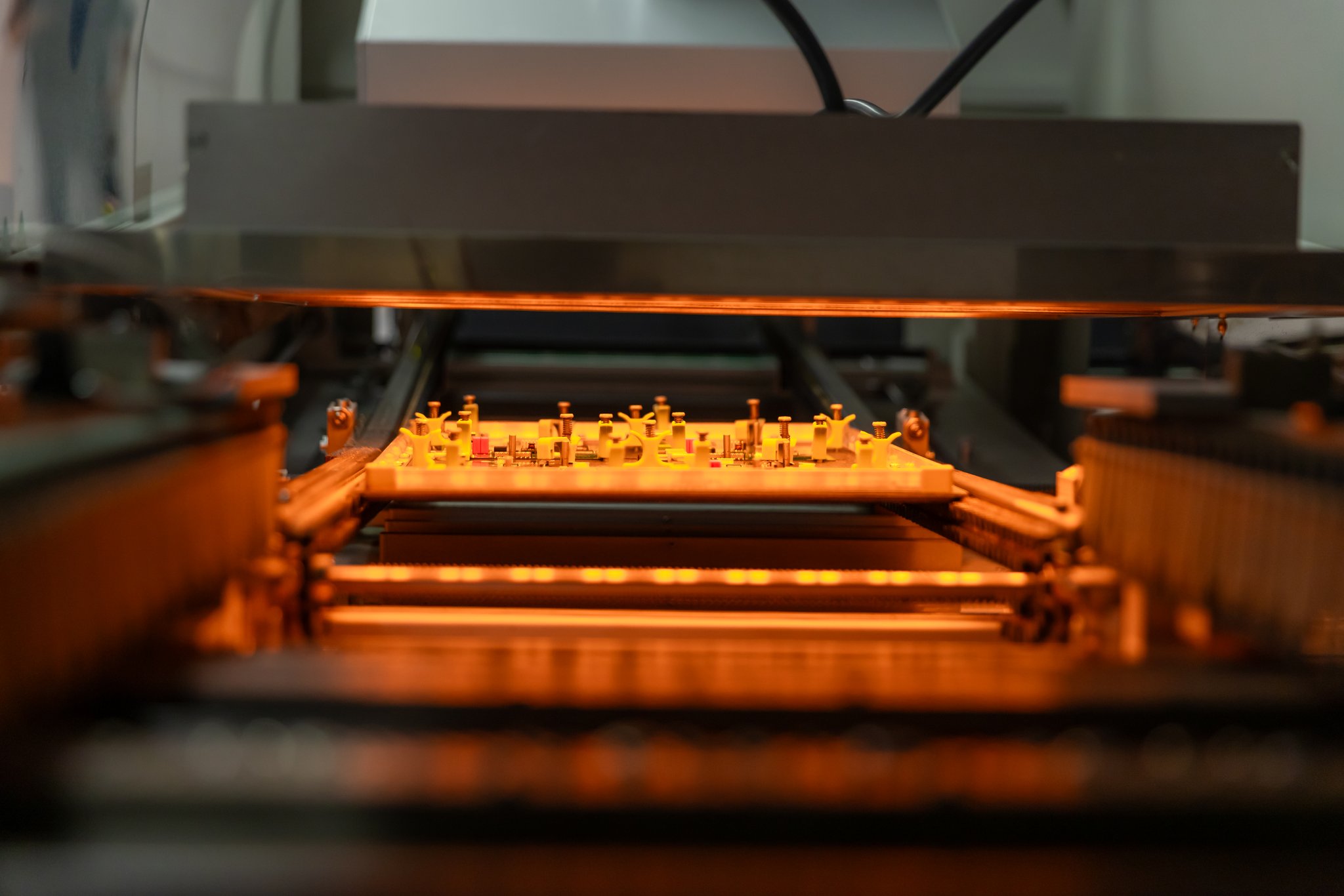
Reflow soldering, also known as reflow, is a soldering technique used in Surface Mount Technology (SMT) to attach electronic components to printed circuit boards. It utilizes hot airflow to melt and reflow solder paste at high temperatures, forming good solder joints.
Paramax 15NZ12 BTU oven is a recirculation impingement, convection reflow soldering system for SMT process. Oven precisely heats and melts solder paste, bonding surface-mount components onto printed circuit boards with uniform temperature control and high production efficiency.
Heated Zone: 12 TOP / 12 Bottom, Conveyor Width: 2-18 In, Atmosphere: Air/ Nitrogen
Reflow Soldering is a PCB assembly process used in SMT (Surface Mount Technology) where electronic components are soldered onto a PCB by melting solder paste using controlled heat. It is the most common method used to assemble SMD components like BGA, QFN, resistors, capacitors, ICs, and more.
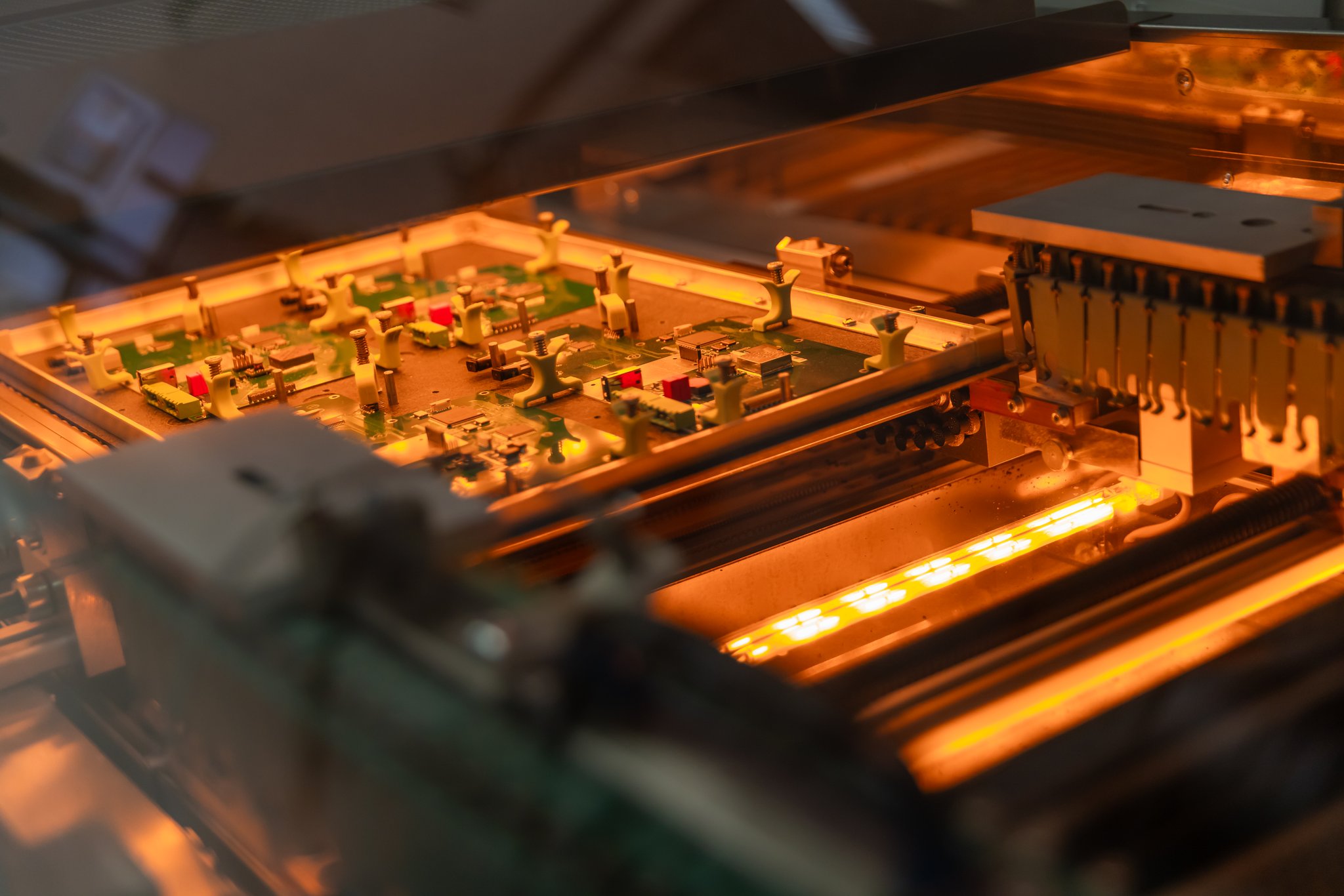
Solder Paste Printing: A solder paste (mixture of solder alloy + flux) is printed on PCB pads using a stencil for accurate paste deposition..
Component Placement: A high-speed pick-and-place machine places SMD components precisely on the solder paste for stable alignment.
Solder Joint Formation: When solder paste melts, it creates strong electrical and mechanical connections between component leads and PCB pads.
Types of Reflow SolderingConvection Reflow (Hot Air) Uses heated air circulation to melt solder paste through controlled airflow.
Infrared ReflowUses IR radiation for heating and solder melting during the thermal profile.
Vapor Phase ReflowUses hot vapor (Galden fluid vapor) for uniform heating and ultra-low voiding performance.
Our Reflow Soldering Services are optimized to produce durable, high-quality solder connections that withstand demanding operating environments. Through advanced thermal process control, automated inspection, and continuous quality monitoring, we help manufacturers achieve defect-free SMT assemblies with exceptional electrical and mechanical reliability.
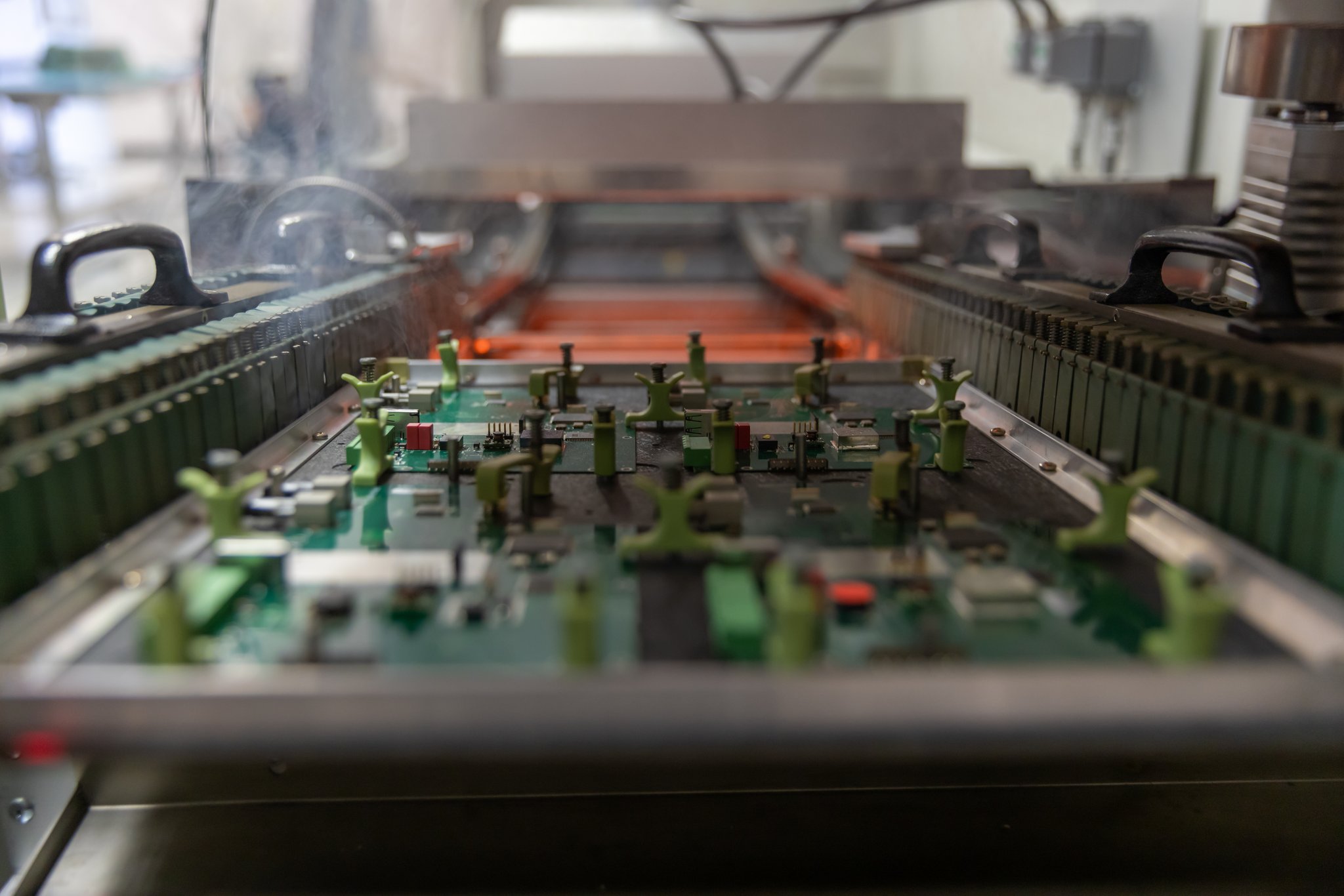
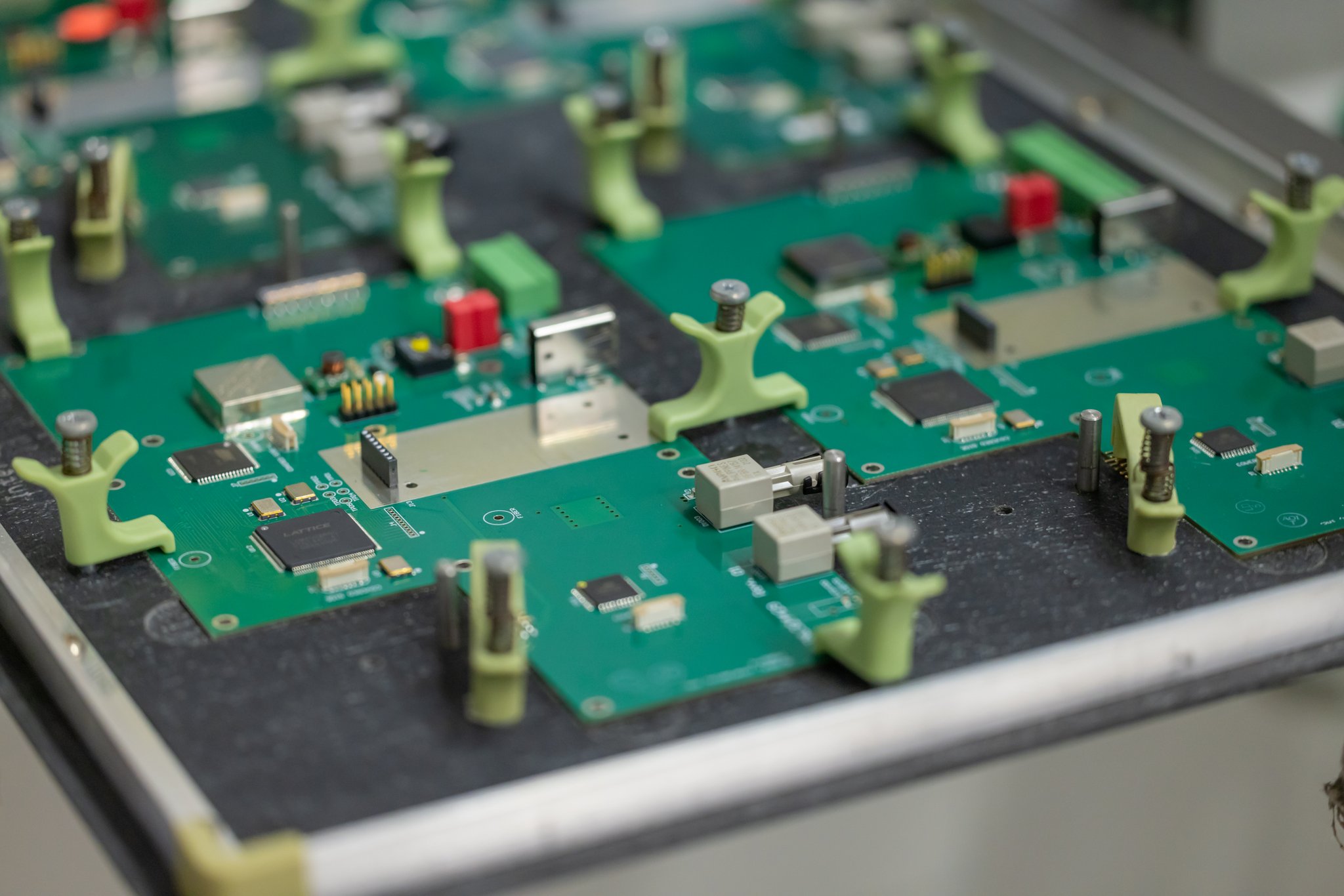
Multi-Zone Precision Reflow Ovens: Controlled thermal profiling ensures consistent solder joint formation across all PCB assemblies.
Optimized for Fine-Pitch & BGA Components:Supports HDI, multilayer, RF, and high-density SMT assemblies with superior process accuracy.
Advanced Process Monitoring:Real-time thermal profiling, SPI, AOI, and X-ray inspection reduce defects and improve manufacturing yield.
IPC-Compliant Manufacturing:Industry-standard soldering processes deliver reliable, repeatable, and high-quality electronic assemblies.
Find answers to common questions about thermal profiling, convection ovens, nitrogen reflow, and preventing thermal shock during SMT assembly.
Reflow soldering is the most common method used in Surface Mount Technology (SMT) to attach electronic components to a PCB. After solder paste is printed on the board and components are placed, the entire assembly is passed through a tightly controlled convection oven. The heat melts the microscopic solder spheres in the paste, permanently bonding the components to the board.
A proper thermal profile consists of four distinct zones: Preheat (slowly raising the board's temperature to avoid thermal shock), Thermal Soak (holding the temperature steady to activate the flux and normalize heat across the board), Reflow (spiking the heat above the solder's melting point to create the joint), and Cooling (safely dropping the temperature to solidify the solder).
Every PCB design absorbs heat differently based on its layer count, copper weight, and component density. If a board is heated too quickly, components can crack. If it gets too hot, sensitive silicon chips will be destroyed. A custom thermal profile guarantees that the coldest point on the board reaches reflow temperatures without the hottest point exceeding component damage thresholds.
Before running production, we use a "Golden Board"—a sacrificial test PCB outfitted with multiple physical thermocouples. These sensors are attached to known hot spots (edges, small components) and cold spots (heavy copper areas, under large BGAs). We run this board through the oven to mathematically graph the exact heat absorption and adjust the oven zones accordingly.
Traditional leaded solder (SnPb) melts at approximately 183°C, allowing for cooler, less stressful oven profiles. Lead-free solder (like RoHS-compliant SAC305) requires significantly higher temperatures, melting around 217°C, with peak oven temperatures often hitting 240°C to 250°C. This requires stricter process control to prevent damaging heat-sensitive parts.
Pumping inert Nitrogen gas into the reflow oven actively displaces Oxygen. Oxygen causes rapid oxidation of both the solder pads and the melting solder paste at high temperatures. Nitrogen reflow creates a pristine environment that results in brighter, stronger, and more reliable solder joints—which is especially critical for higher-temperature lead-free processes.
Tombstoning occurs when a small, two-pad component (like a 0402 resistor) stands up vertically on one end during reflow. This happens when the solder on one pad melts and pulls the component before the other pad melts. We prevent this by ensuring perfect DFM pad geometries, balanced copper pour routing, and a perfectly engineered thermal soak zone.
If a board contains components that cannot survive a standard reflow cycle (like certain plastic connectors, batteries, or specialized sensors), we leave them off during the primary SMT run. They are later attached using highly controlled selective soldering machines or specialized hand-soldering stations.
Vapor Phase Soldering uses the latent heat of a boiling, inert liquid (Galden) to transfer heat to the PCB. Because the vapor can never exceed the exact boiling point of the liquid, it is physically impossible to overheat the board. It is highly recommended for massively thick backplanes or boards with extreme varying thermal masses.
Yes. We first populate and reflow the top side. We then flip the board, print paste, place components, and run it through the oven a second time. The surface tension of the solidified solder is incredibly strong and typically prevents bottom-side components from falling off. For extremely heavy bottom-side parts, we use specialized SMT adhesives.
Partner with Altest Corporation for your next high-reliability PCB fabrication and turnkey SMT assembly project. Our engineering team is ready to review your gerber files and provide a detailed, competitive estimate.