

Flex Board Assembly | Process, Benefits & Applications
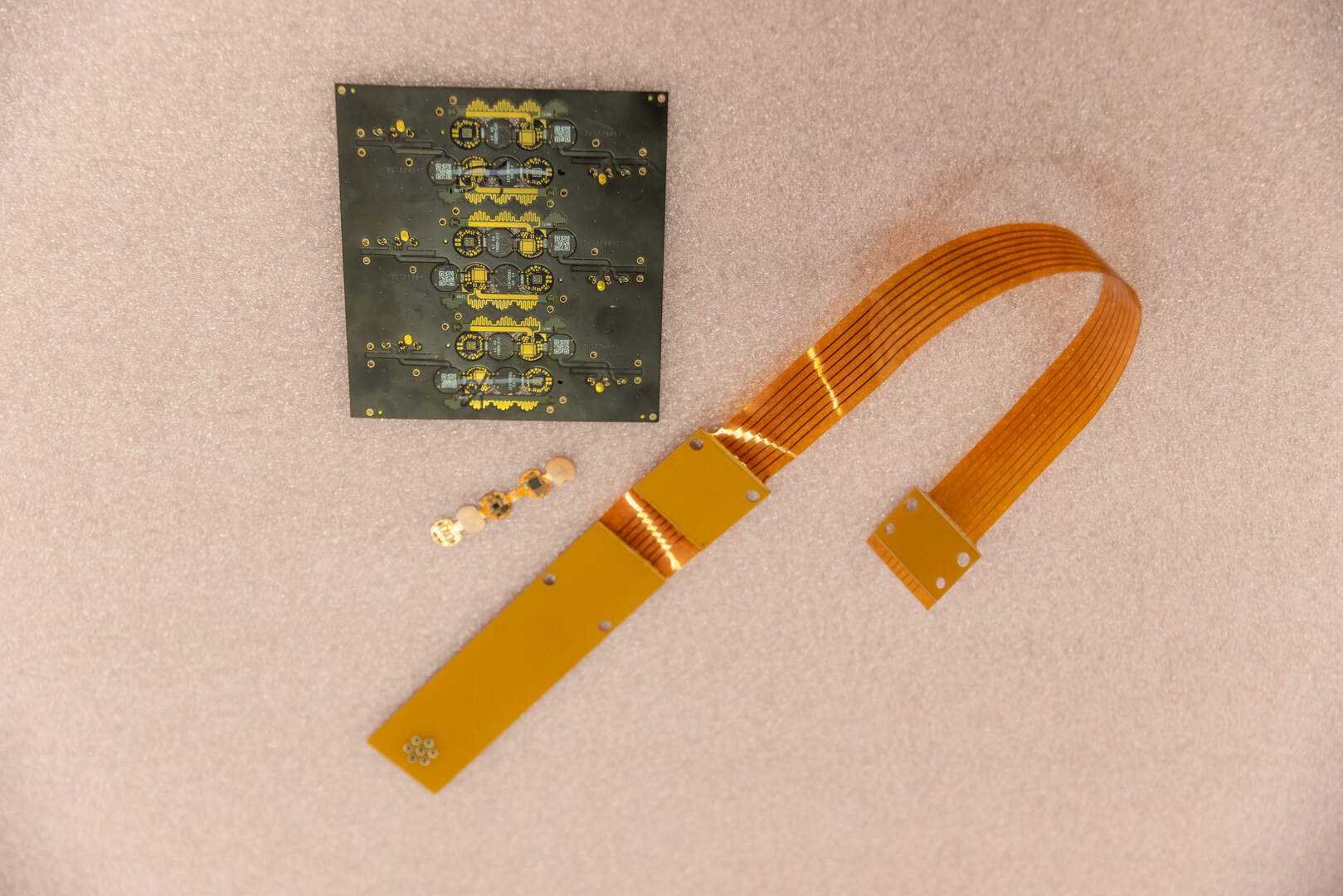
Design and Layout
The design of a flex PCB is similar to that of a rigid PCB, with the added complexity of needing to account for the material’s ability to bend. Engineers use CAD (Computer-Aided Design) software to create the layout, considering aspects like trace routing, component placement, and the board’s overall flexibility requirements.
Designers also consider flex patterns (how the board will fold or bend) and ensure there are no sharp bends that might damage the circuitry.
Material Selection
Flexible Substrate: The base of the flex PCB is a thin, flexible material. Common materials include polyimide (Kapton) and polyester, chosen for their durability, flexibility, and electrical insulation properties.
Conductive Layers: These are typically copper traces that are applied to the flexible substrate using processes such as etching or lamination.
Solder Mask and Finish: A protective solder mask (similar to rigid PCBs) is applied to prevent shorts and corrosion, and the surface finish (like ENIG, HASL, or OSP) is applied to ensure proper soldering.
Layering (if applicable)
Single-layer Flex PCB:This is a simple design where only one layer of copper is used for the circuitry.
Multi-layer Flex PCB: For more complex designs, multiple layers of flexible material are stacked and bonded together with adhesive and copper interconnects between layers. This allows for higher component density and more complex circuits.
Fabrication:The fabrication of a flex PCB involves several steps, such as
Copper Cladding: Thin copper foil is laminated onto the flexible substrate
Etching:The copper is etched away in certain areas to form the desired circuit pattern.
Hole Drilling (if necessary): For components that require through-holes, they are drilled into the flexible substrate.
Plating and Lamination: If it’s a multi-layer design, layers are laminated together, and through-hole plating is done to create electrical connections between the layers.
Assembly:Once the flex PCB is fabricated, the assembly process is similar to that of rigid PCB assembly:
Soldering Components: Surface mount technology (SMT) is the most common method for placing components on a flexible PCB. Because the board is flexible, it requires careful handling to avoid damaging the traces or components.
Bending and Testing: If the flex PCB needs to bend, it is tested to ensure that the components stay in place and that the electrical connections remain intact after bending. This might involve some custom handling equipment or fixtures to position the flex PCB correctly during soldering.
Inspection and Quality Control: The finished flex PCB assembly undergoes rigorous testing, including electrical testing (to check for shorts, open circuits, etc.) and mechanical testing (to ensure it can withstand bending or flexing).
Final Packaging: Once the assembly is complete and passes testing, the flexboard is typically packaged in a way that protects it during transportation or further integration. Special care must be taken to avoid stress on the board that could affect its flexibility or integrity.
Applications of Flexboard Assemblies
Flexboard assemblies are used in a variety of applications, particularly where space is at a premium or where components need to conform to a specific shape. Common applications include:
Wearables: Smartwatches, fitness trackers, medical devices
Consumer Electronics: Smartphones, laptops, and tablets (e.g., internal flexible cables or connectors)
Automotive: In dashboards, control systems, or even flexible sensors
Medical Devices: Flexible sensors or diagnostic equipment
Aerospace and Defense: Flexible interconnects in sensors or systems subject to movement or vibration
Benefits of Flexboard Assemblies
Space-Saving: Flex PCBs can be designed to wrap around objects or fit into smaller spaces, allowing for more compact and lightweight devices.
Reliability in Harsh Conditions: They can tolerate vibrations and mechanical stresses better than rigid boards, making them suitable for applications in dynamic environments.
Flexibility: As the name suggests, they can bend and conform to various shapes, which is useful for applications like foldable or wearable electronics.